Previously published by the SEG in: Extended Abstracts of the 2001 Exposition and Seventy First Annual Meeting of the Society of Exploration Geophysicists, San Antonio, U.S.A.
The gross reservoir interval of well 85-1 is approximately 80ft thick and consists of interbedded sand-shale. Cross-plotting acoustic impedance and Vp/Vs versus water saturation and volume of shale provides insight into the acoustic properties of the reservoir. Overlying, mid-reservoir and underlying shales exhibit different acoustic properties. The acoustic impedance of the overlying shale is approximately 10% lower than the mid-reservoir and underlying shale. The underlying shale has a higher Vp/Vs ratio than the mid-reservoir or overlying shale. Acoustic impedance of the reservoir is approximately 10% lower than the acoustic impedance of the overlying shale. Vp/Vs of the reservoir is approximately 10% lower than the Vp/Vs of the overlying shale.
The gross reservoir section of well 129-1 fines upward and is approximately 43ft thick. Acoustic impedance versus water saturation and volume of shale cross-plots indicate that the "cleaner" base of reservoir exhibits an acoustic impedance that is approximately 20% lower than the bounding shale. Cross-plotting acoustic impedance versus water saturation for the transitional zone between overlying shale and the reservoir reveals a linear acoustic impedance versus water saturation relationship, possibly indicating patchy fluid content in this shalier zone. Vp/Vs versus water saturation and volume of shale cross-plots indicate that the shale below the reservoir has a lower Vp/Vs than the bounding shale and top reservoir transition. Vp/Vs of the reservoir is approximately 35% lower than Vp/Vs of the bounding shale.
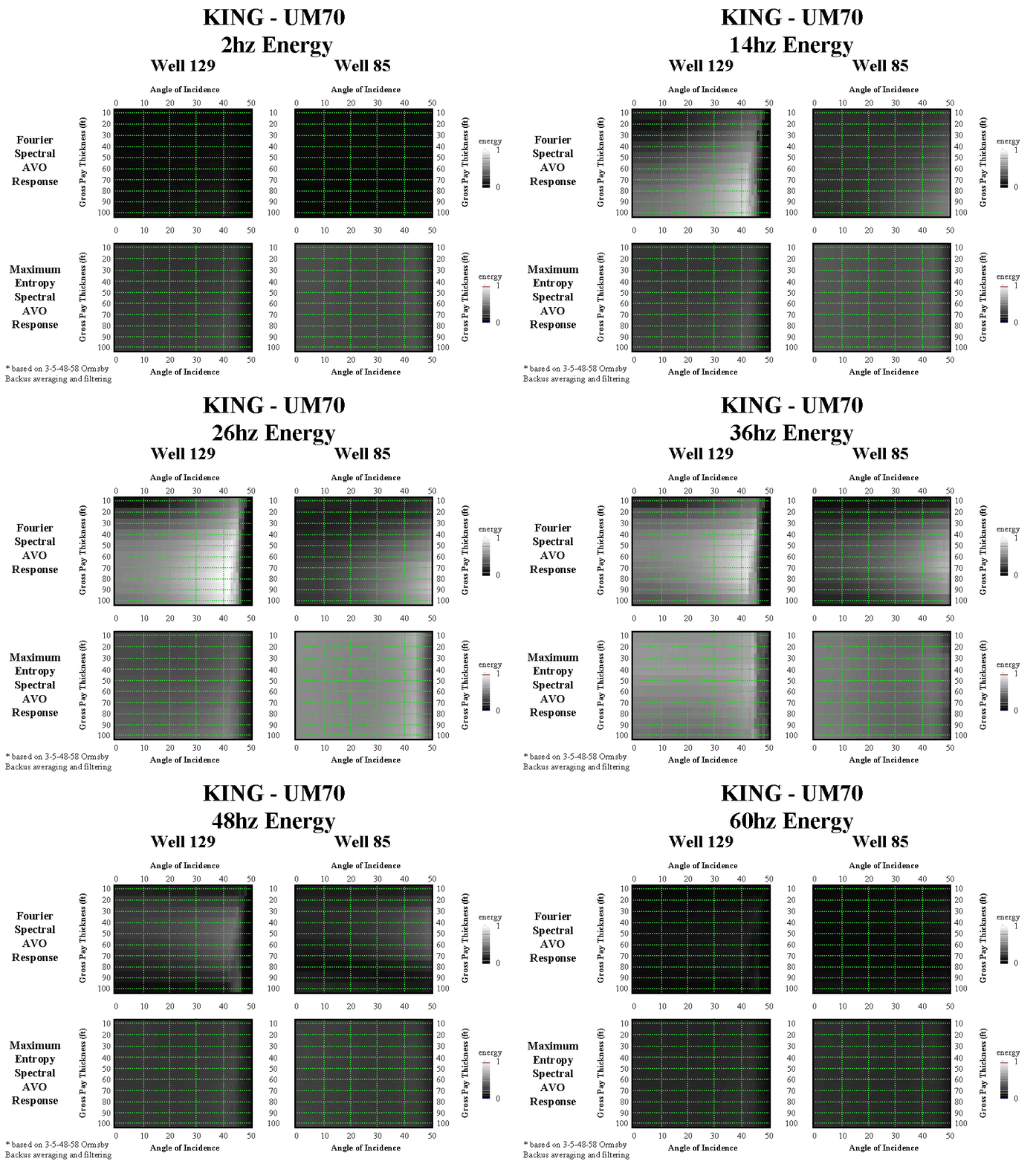
Synthetic AVA (amplitude-versus-angle) seismic gathers were created for both wells (129-1 and 85-1) via a Zoeppritz-based solution for one degree intervals from 0 to 50 degrees, for each thickness (from 10ft to 100ft, every 10ft). They were then filtered using a 3-5-48-58 Ormsby filter. These bandwidth parameters simulate the spectral bandwidth of real data gathers, and were determined by spectral analysis of real AVA gathers during data processing. Even at a thickness of 100ft, the top and base of reservoir reflections tune to produce a complex composite reflection. These tuned AVA models provide a more geologically realistic representation of the AVA response than half-space models that isolate the top and base of reservoir reflections.
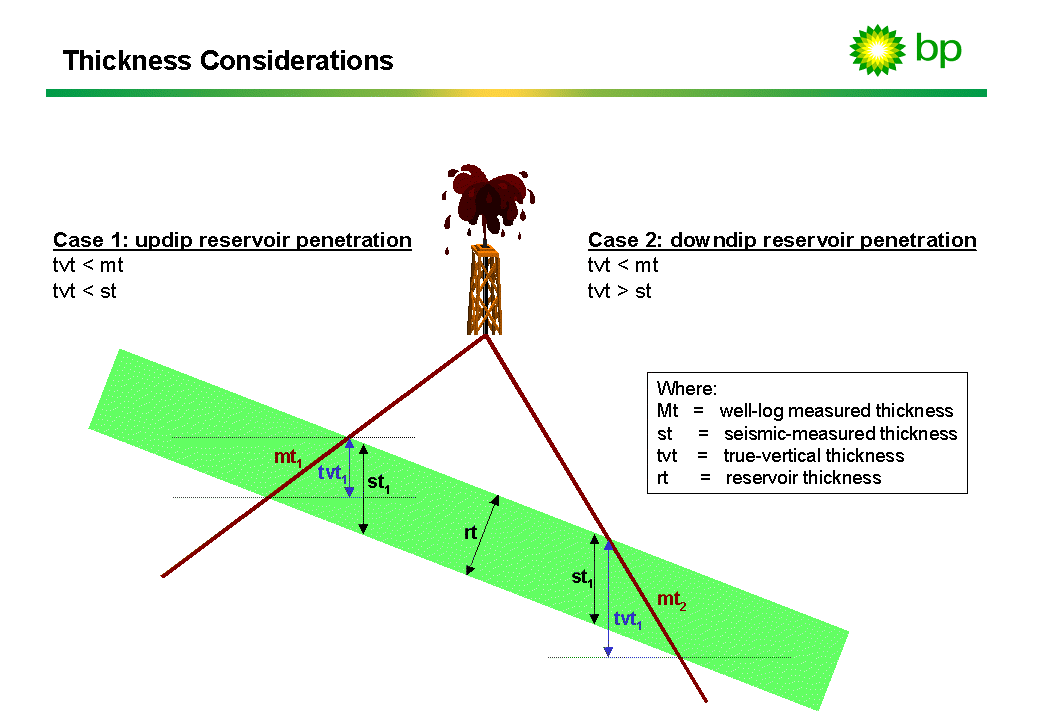
It is important to keep in mind that in seismic and well-log work, we utilize a variety of thickness estimates such as measured thickness and true-vertical thickness. These differences in thickness, affect seismic-to-log calibration.
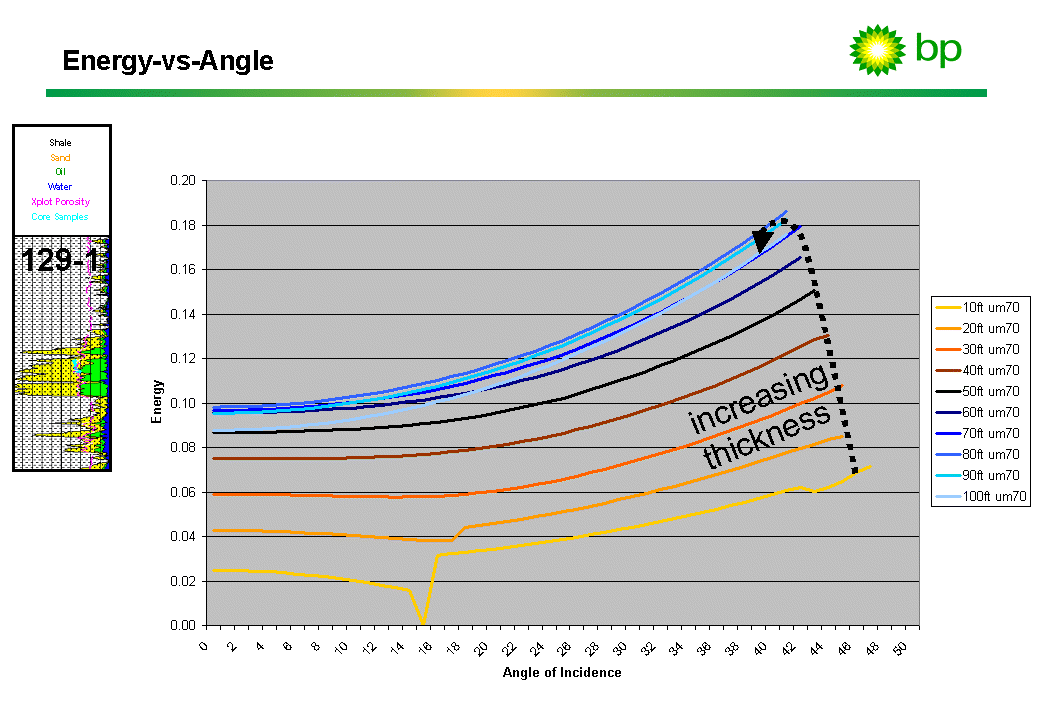
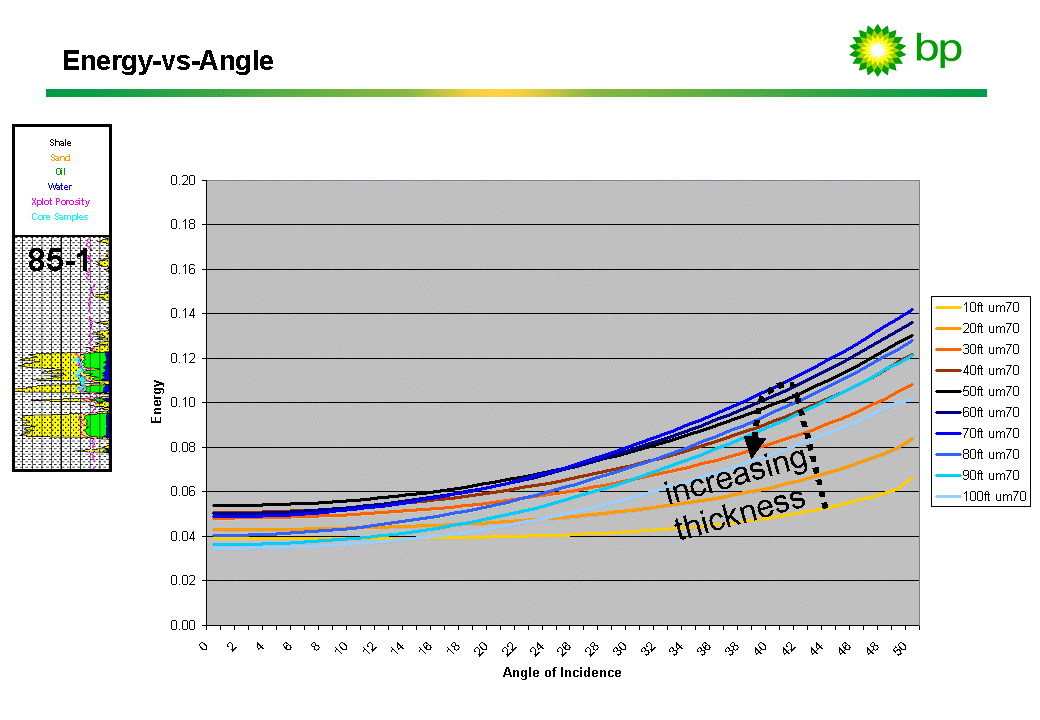
Flow-unit stacking and gross reservoir thickness have considerable impact on AVO signatures (including AVO intercept and slope). Thickness variability causes AVO signatures to follow wedge-based tuning behaviour.
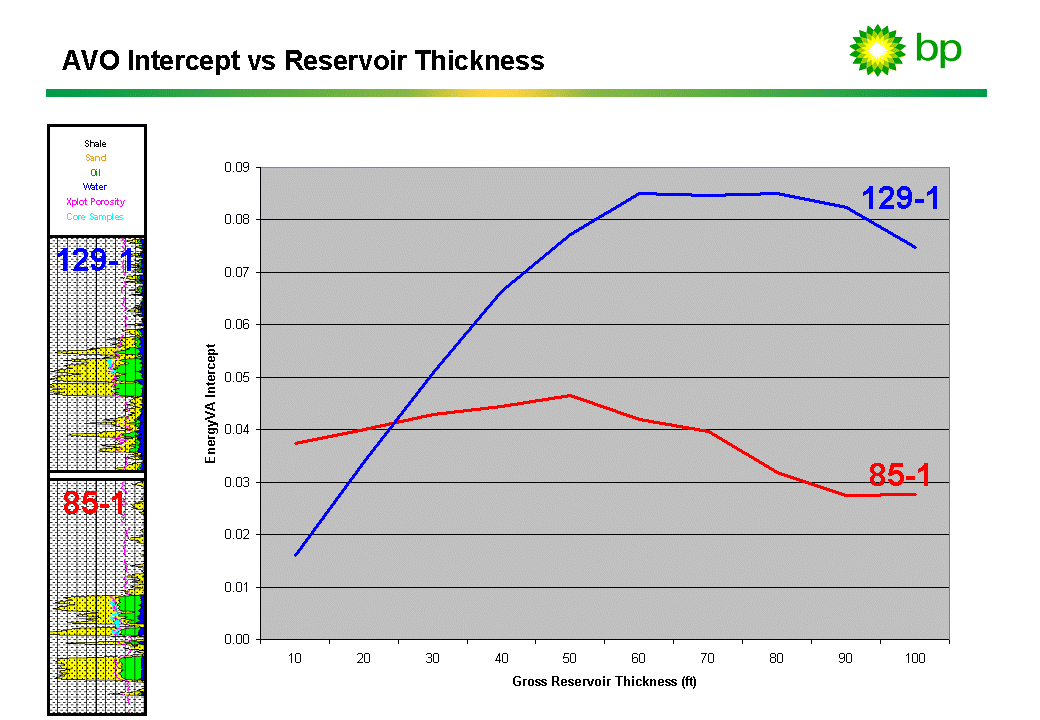
EVA signatures from both wells (129-1 and 85-1) follow the classic wedge-based tuning curve. However, the destructive interference imposed by the intra-reservoir shale interval in well 85-1, significantly lowers that interval's reflection energy. This destructive interference causes maximum tuning energy to occur at 50ft thickness rather than the 75ft thickess at well 129-1.
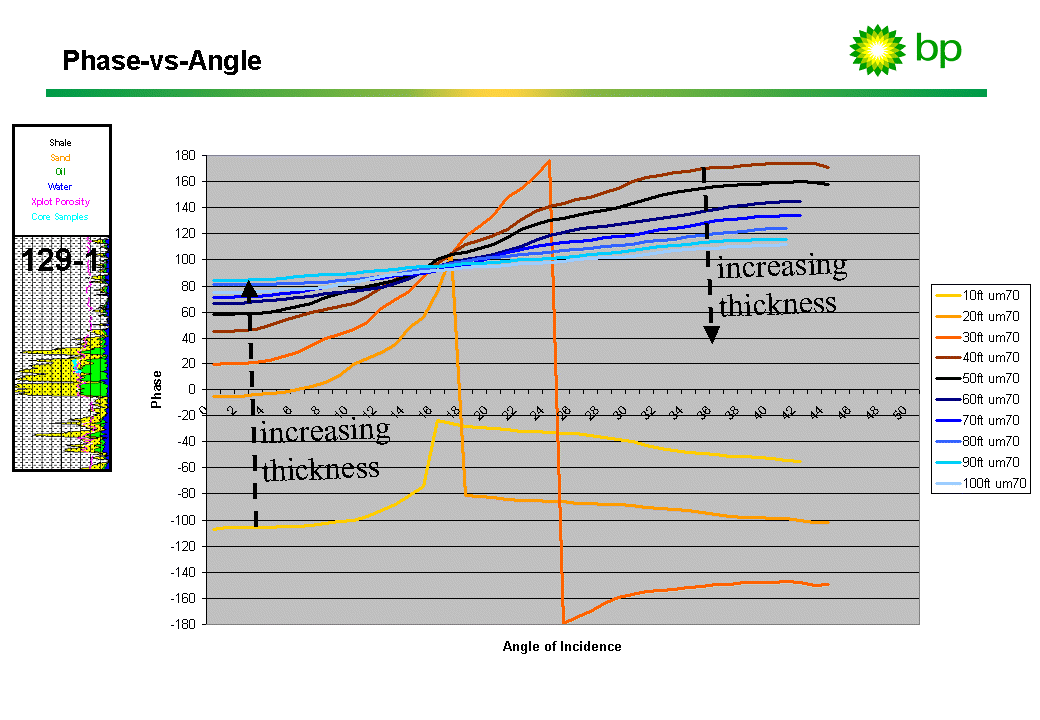
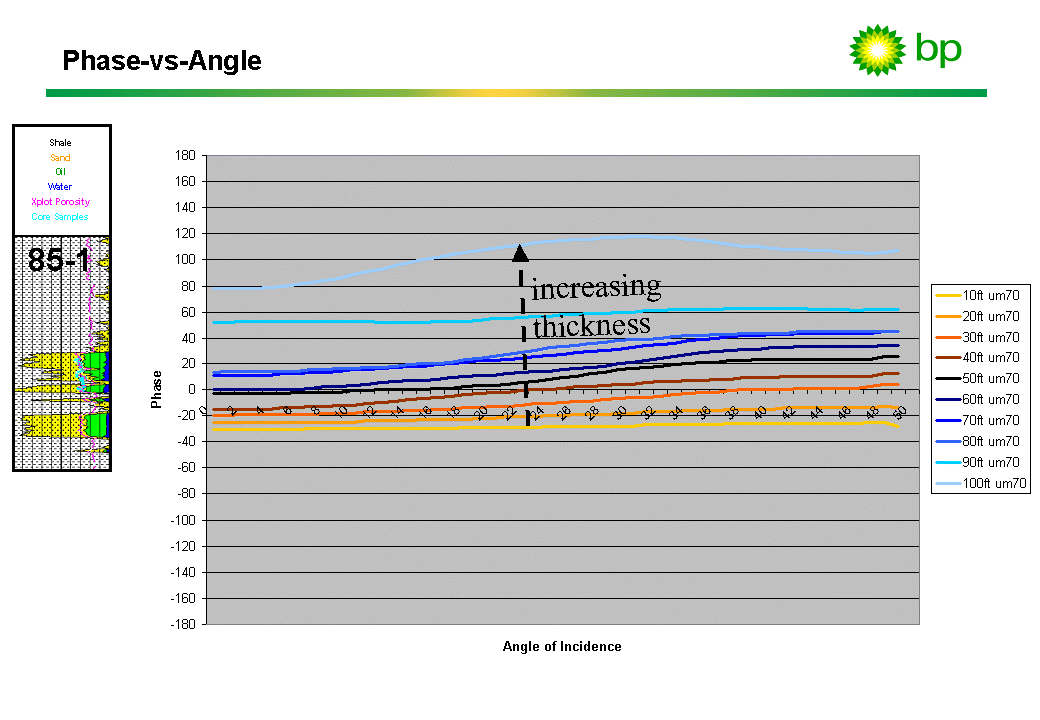
The PVA signatures from both wells (129-1 and 85-1) indicate a phase generally ranging from 0 to 80 degrees at small angles of incidence (depending on thickness). Reflection energy from the 10ft and 20ft gross thickness is small enough that the corresponding phase values become unstable (hence the phase instability that occurs half way through the angle range for well 85-1). Note that the complex local layering tunes the response, causing phase to deviate from the 0 or 90 degrees predicted by simple, blocky-layer modeling.
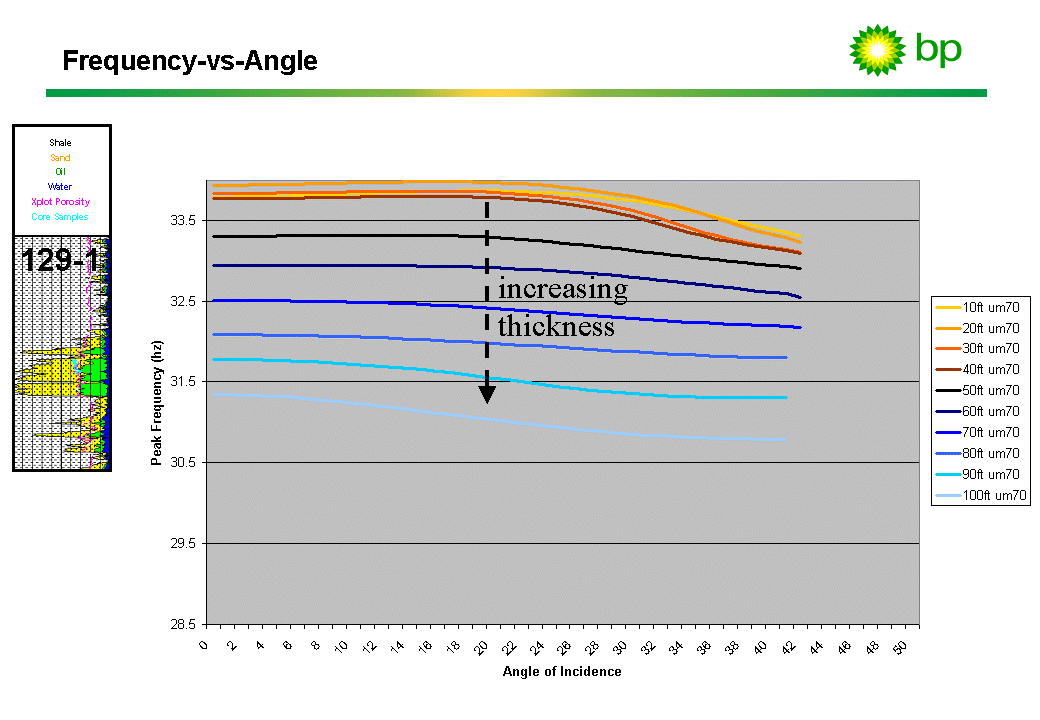
The FVA signatures from both wells (129-1 and 85-1) indicate a dominant frequency between 30 and 34hz. The dominant frequency at the 85-1 well is lower because of the destructive interference caused by the intra-reservoir shale.
AVO intercept (B0) and AVO slope (B1) are two commonly used offset-dependent attributes. In this experiment, both the intercept and slope were extracted from the EVA signatures. EVA-intercept follows the same tuning behaviour observed in EVA signatures. EVA-slope is positive (increasing energy with angle) for all thicknesses and is also tuned by thickness.
Seismic data is usually scaled using amplitude statistics gathered from large temporal and spatial windows. Since AVO slope and intercept vary as a function of the scalar used (e.g. examine the effect of amplitude scaling on AVO intercept and slope for the two King Field wells), such amplitude balancing needs to be followed by energy matching to bandlimited, modeled reflectivity. This is particularly important if the interpreter plans to quantify AVO behaviour and 2) compare AVO attributes between two independently processed data volumes. If the amplitude scalar differs from one volume to another, AVO characteristics cannot be quantitatively integrated.
AVO attributes including slope and intercept are sensitive to amplitude scaling. Care must be taken to equivalently scale real AVO gathers and modeled AVO gathers, prior to AVO signature extraction. Without such equivalent scaling, quantitative calibration of real-data AVO becomes questionable. To quantitatively compare AVO signatures between any two datasets, the AVO gathers must exhibit not only the same relative scaling but also the same absolute benchmark scaling. Such care in scaling is critical when integrating independent seismic volumes or time-lapse volumes in 4-D applications.
PowerPoint slides.
 Return to Online Training