Interpretational Applications of Spectral Decomposition
Interpretational Applications of Spectral Decomposition
Greg Partyka, James Gridley, and John Lopez
Amoco Production Company
previously published by the SEG in the Leading Edge: Partyka, G.A., Gridley, J.M., and Lopez, J. 1999, Interpretational Applications of Spectral Decomposition in Reservoir Characterization, The Leading Edge, vol. 18, No. 3, pg 353-360.
Introduction
Spectral decomposition provides a novel means of utilizing seismic data and the discrete Fourier transform (DFT) for imaging and mapping temporal bed thickness and geological discontinuities over large 3D seismic surveys (Partyka and Gridley, 1997). By transforming the seismic data into the frequency domain via the DFT, the amplitude spectra delineate temporal bed thickness variability while the phase spectra indicate lateral geologic discontinuities. This signal analysis technology has been used successfully in 3-D seismic surveys to delineate stratigraphic settings such as channel sands and structural settings involving complex fault systems.
Widess pioneered a widely used method for quantifying thin bed thickness (Widess, 1973). Because it uses peak to trough time separation in conjunction with amplitude, Widess' method is dependent on careful seismic processing to establish the correct wavelet phase and true trace to trace amplitudes. Though similar in context, the spectral method proposed here uses a more robust phase independent amplitude spectrum and is designed for examining thin bed responses over large 3D surveys.
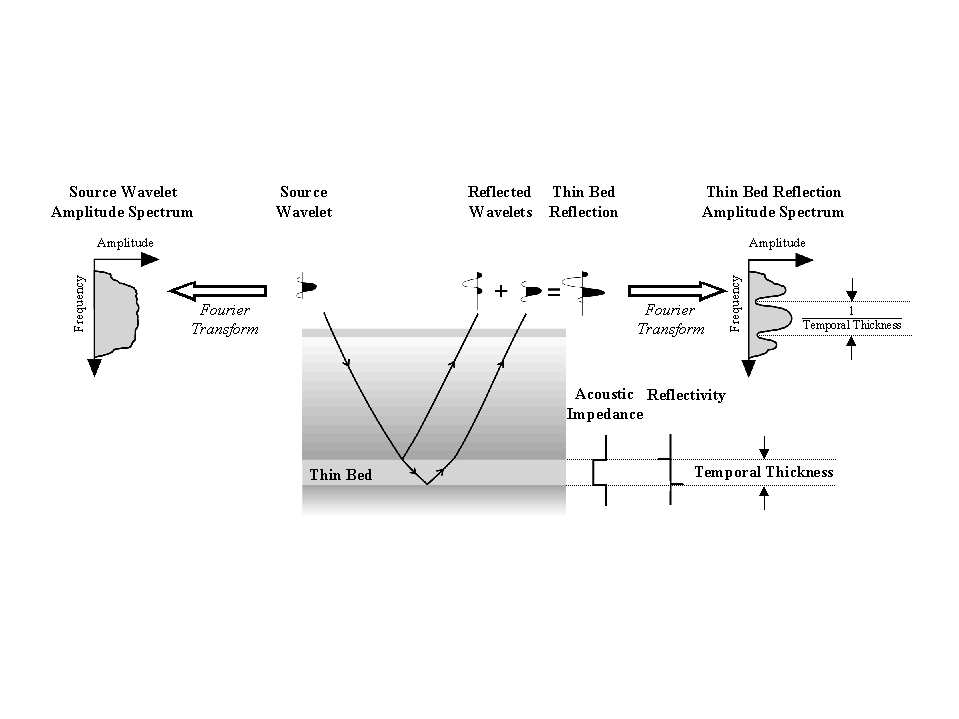
The concept behind spectral decomposition is that a reflection from a thin bed has a characteristic expression in the frequency domain that is indicative of the temporal bed thickness. For example, a simple homogeneous thin bed introduces a predictable and periodic sequence of notches into the amplitude spectrum of the composite reflection. The seismic wavelet however, typically spans multiple subsurface layers and not just one simple thin bed. This layered system results in a complex tuned reflection that has a unique frequency domain expression.
The amplitude spectrum interference pattern from a tuned reflection defines the relationship between acoustic properties of the individual beds that comprise the reflection. Amplitude spectra delineate thin bed variability via spectral notching patterns, which are related to local rock mass variability. Likewise, phase spectra respond to lateral discontinuities via local phase instability. Together, the amplitude and phase related interference phenomena allow the seismic interpreter to quickly and efficiently quantify and map local rock mass variability within large 3-D surveys.
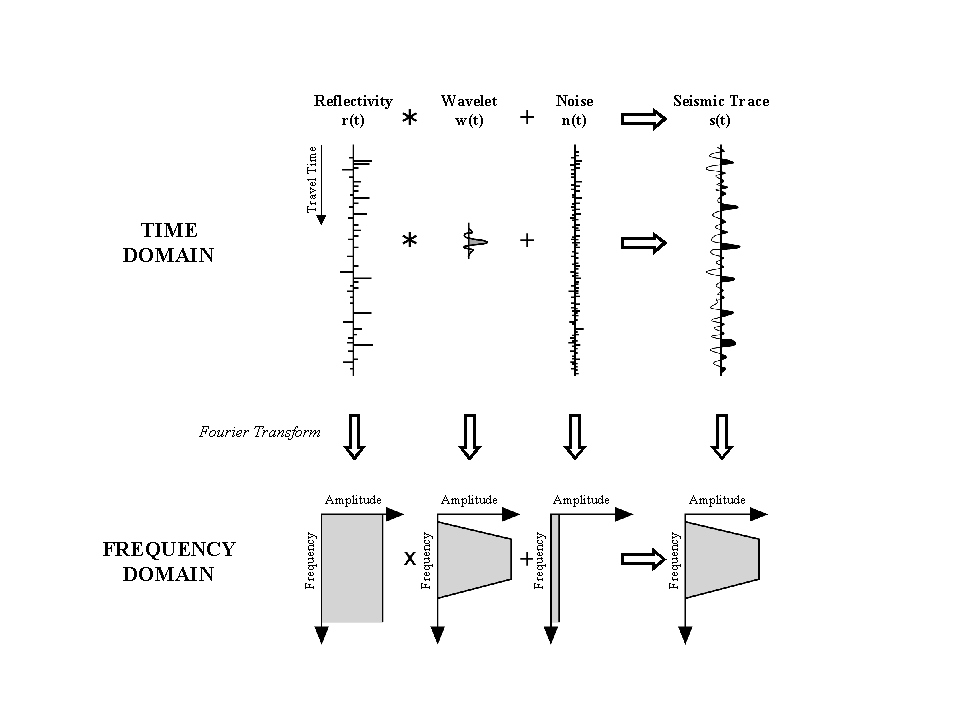
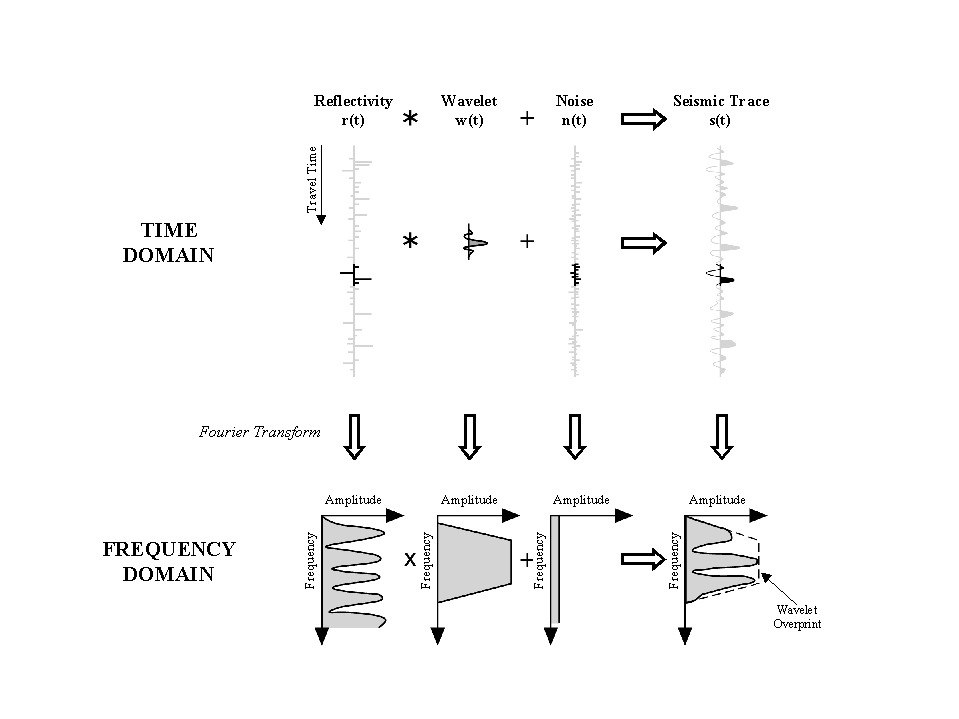
The frequency response difference between a long window and a short window amplitude spectrum is significant. Wherein the transform from a long seismic trace approximates the spectrum of the wavelet, the transform from a short seismic trace comprises a wavelet overprint and a local interference pattern representing the acoustic properties and thickness of the geologic layers spanned by the analysis window. The short window amplitude spectrum no longer approximates just the wavelet, but rather the wavelet plus local geologic layering.
With a few exceptions such as cyclothems and sabkhas, long analysis windows encompass a great deal of geological variations that statistically randomize interference patterns of individual thin beds. The resulting long window reflectivity spectra appear white or flat. This behavior is the common premise behind multiple suppression via deconvolution. Given a large enough window, the geological stacking of individual thin layers can be considered random. The convolution of a source wavelet with a random geologic section creates an amplitude spectrum that resembles the wavelet.
The response from a short window is dependent on the acoustic properties and thicknesses of the layers spanned by the analysis window. The shorter the analysis window, the less random the sampled geology. The amplitude spectrum no longer approximates just the wavelet, but rather the wavelet plus local layering. In such small windows, the geology acts as a local filter acting on the reflecting wavelet, thereby attenuating the spectrum of the wavelet. The resulting amplitude spectrum is not white and represents the interference pattern within the analysis window.
The short window phase spectrum is also useful in mapping local rock mass characteristics. Because phase is sensitive to subtle perturbations in the seismic character, it is ideal for detecting lateral acoustic discontinuities. If the rock mass within the analysis window is laterally stable, its phase response will likewise be stable. If a lateral discontinuity occurs, the phase response becomes unstable across that discontinuity. Once the rock mass stabilizes on the other side of the discontinuity, the phase response likewise stabilizes.
Wedge Model Response
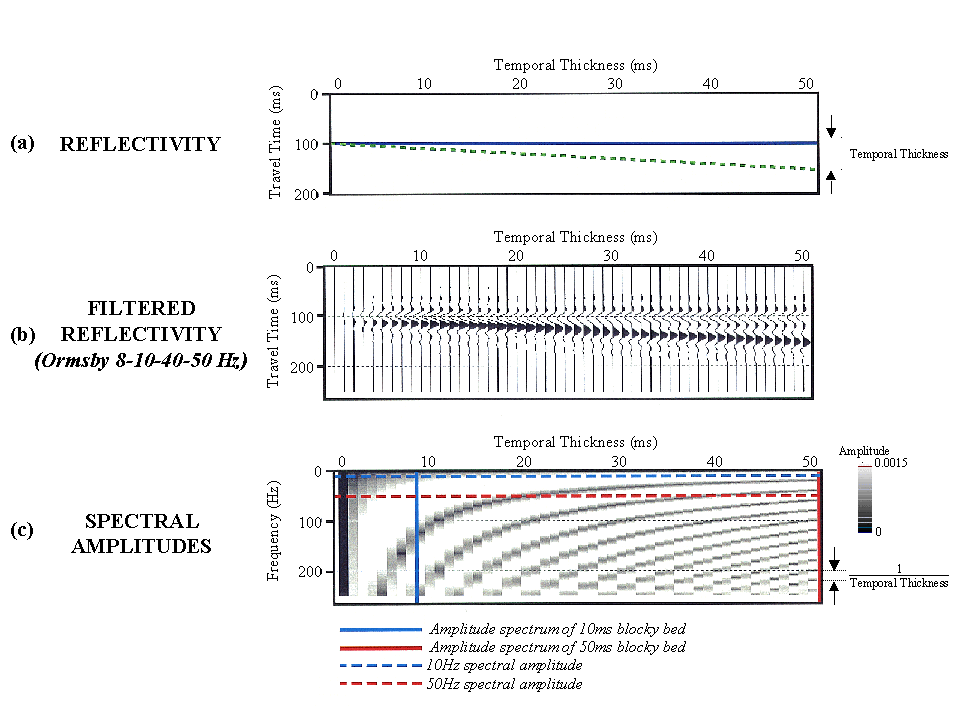
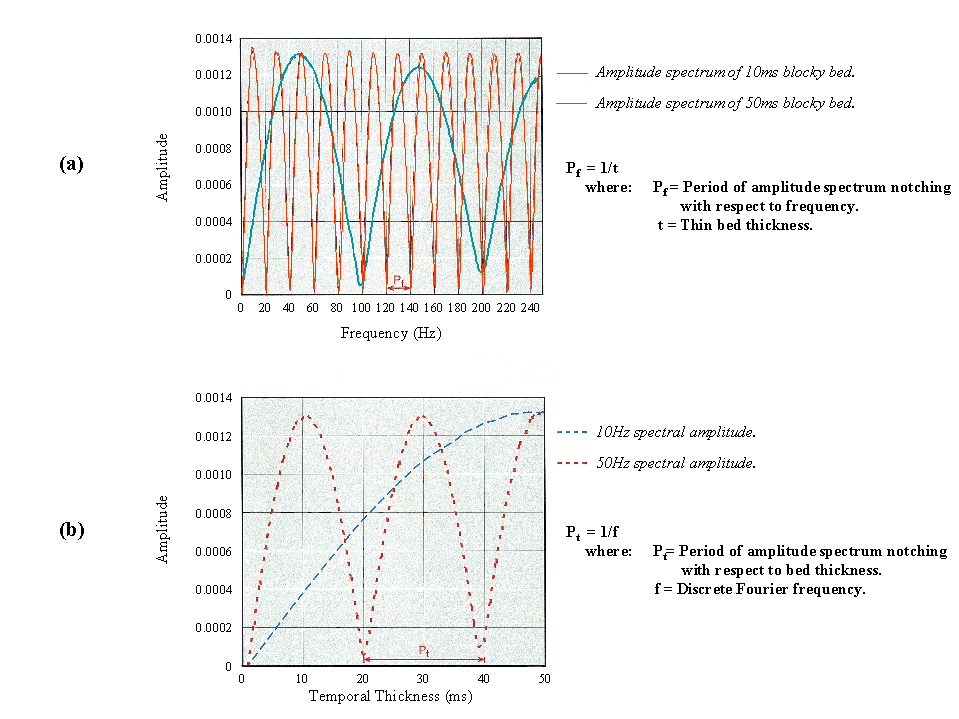
Spectral decomposition and the thin bed tuning phenomenon can be illustrated by a simple wedge model . The temporal response consists of two reflectivity spikes of equal but opposite magnitude. The top of the wedge is marked by a negative reflection coefficient, while the bottom of the wedge is marked by a positive reflection coefficient. The wedge thickens from 0 ms on the left to 50 ms on the right. Filtering the reflectivity model (using an 8-10-40-50 Hz Ormsby filter) illustrates the tuning effects brought on with a change in thickness. The top and bottom reflections are resolved at larger thicknesses, but blend to become one reflection as the wedge thins.
Pt = Period of notches in the amplitude spectrum with respect to temporal thickness (seconds), and
f = Discrete Fourier frequency.
Even a relatively low frequency component such as ten hertz quantifies thin bed variability.
This wedge model illustrates the application of this approach to a very simple two-reflector reflectivity model. Increasing the complexity of the reflectivity model will in turn complicate the interference pattern.
The Tuning Cube
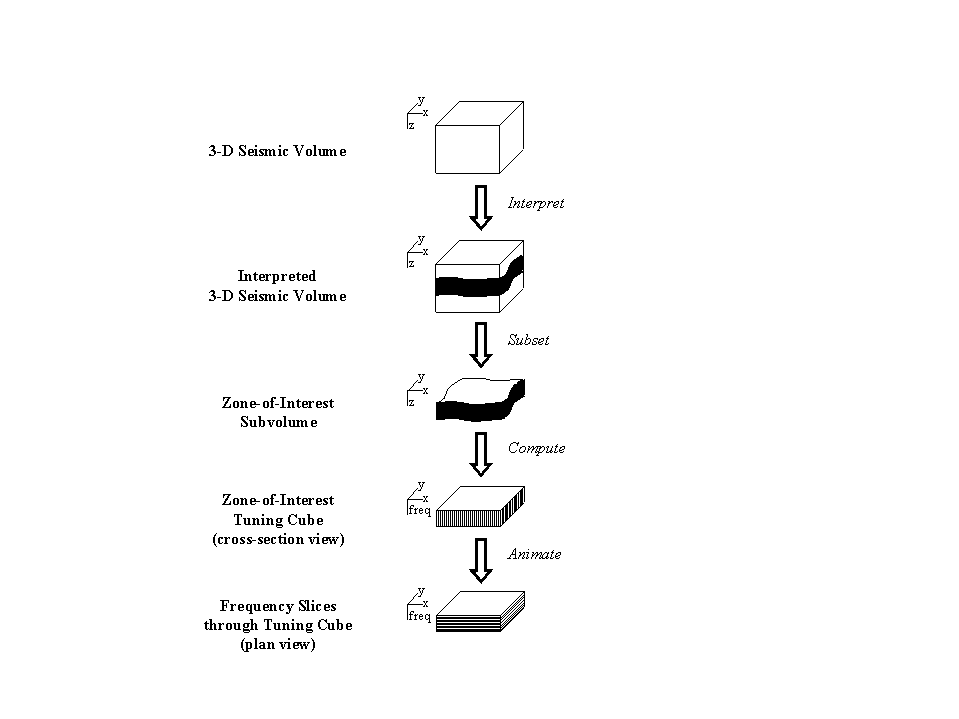
Amoco's most common approach to characterize reservoirs using spectral decomposition is via the "Zone of Interest Tuning Cube". The interpreter starts by mapping the temporal and vertical bounds of the seismic zone of interest. A short temporal window about the zone of interest is then transformed from the time domain into the frequency domain. The resulting "Tuning Cube" can be viewed in cross-section or plan view (common frequency slices).
The frequency slice form is typically more useful because it allows the interpreter to visualize thin bed interference patterns in plan view, thereby drawing on experience in identifying textures and patterns indicative of geologic processes. Amplitude or phase versus frequency behaviour/tuning is fully expressed by animating through the entire frequency range (i.e., through all frequency slices).
Removing the Wavelet Overprint
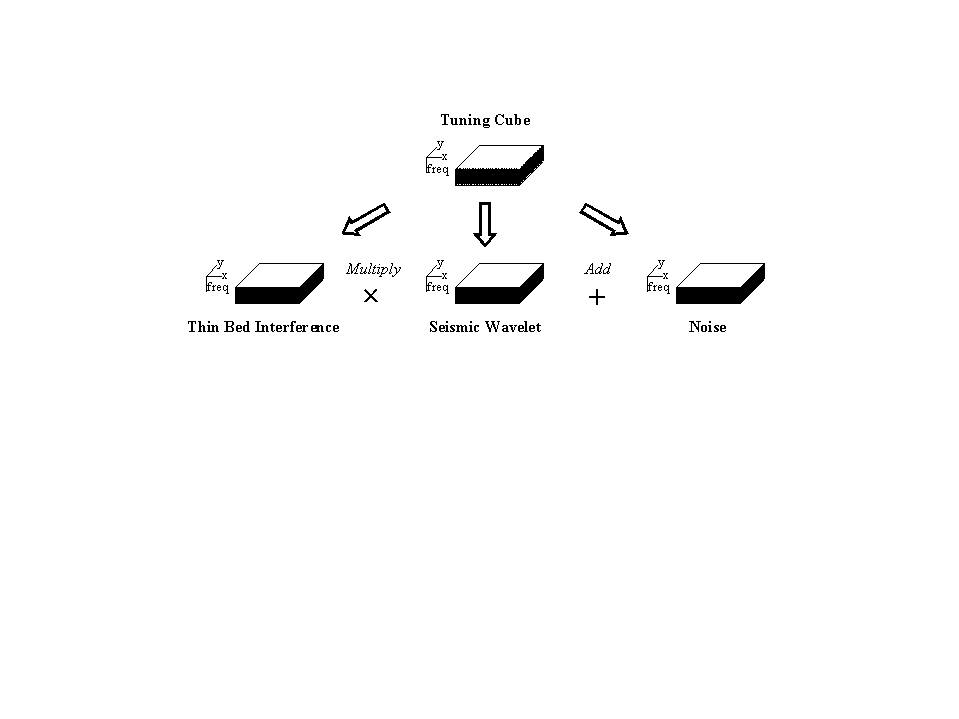
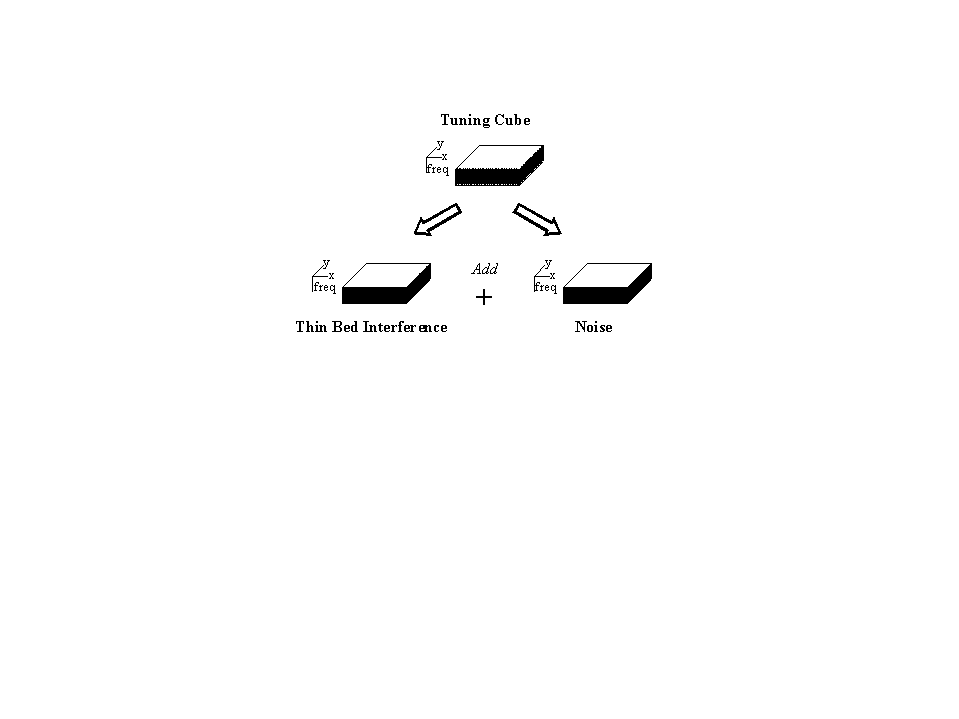
The Tuning Cube consists of three components: thin bed interference, wavelet overprint and noise. Since the geologic response is the most interesting component for the interpreter, it is prudent to balance the wavelet amplitude without degrading the geological information. In doing this, the tuning cube is reduced to thin bed interference and noise.
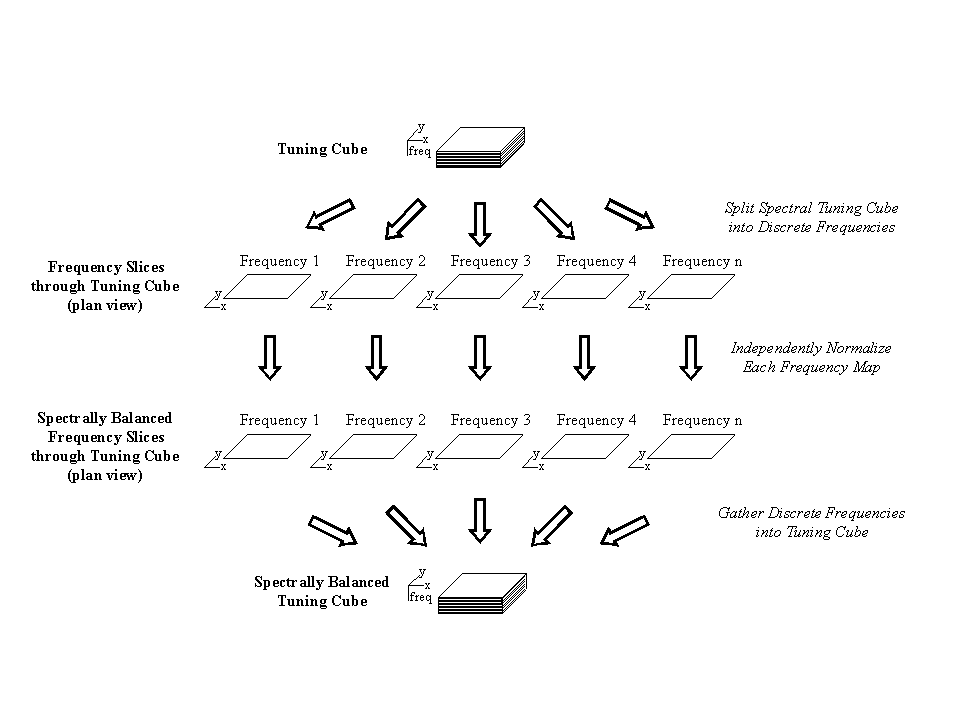
Common spectral balancing techniques used in seismic data processing rely on sparse invariant stationary statistics. If we assume that the geologic tuning varies considerably along any flattened horizon, then we balance the wavelet spectrum by equalizing each frequency slice according to its average amplitude. After whitening to minimize the wavelet effect, the tuning cube retains two main components: thin bed interference and noise.
In frequency slice form, thin bed interference appears as coherent amplitude variations. Random noise speckles the interference pattern in a similar fashion to poor quality television reception. At dominant frequencies, the relatively high signal to noise ratio results in clear pictures of thin bed tuning. Movement away from dominant frequency causes the signal to noise ratio to degrade. At frequencies beyond usable bandwidth, the poor signal to noise ratio results in a noise map.
Exploring Beyond the Localized Zone-of-Interest
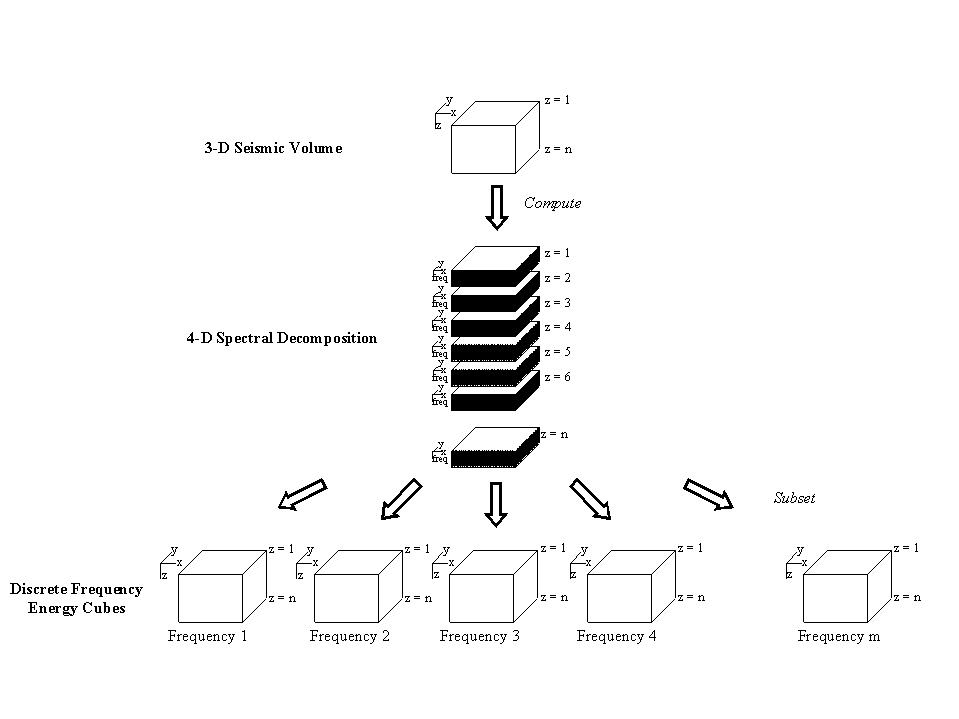
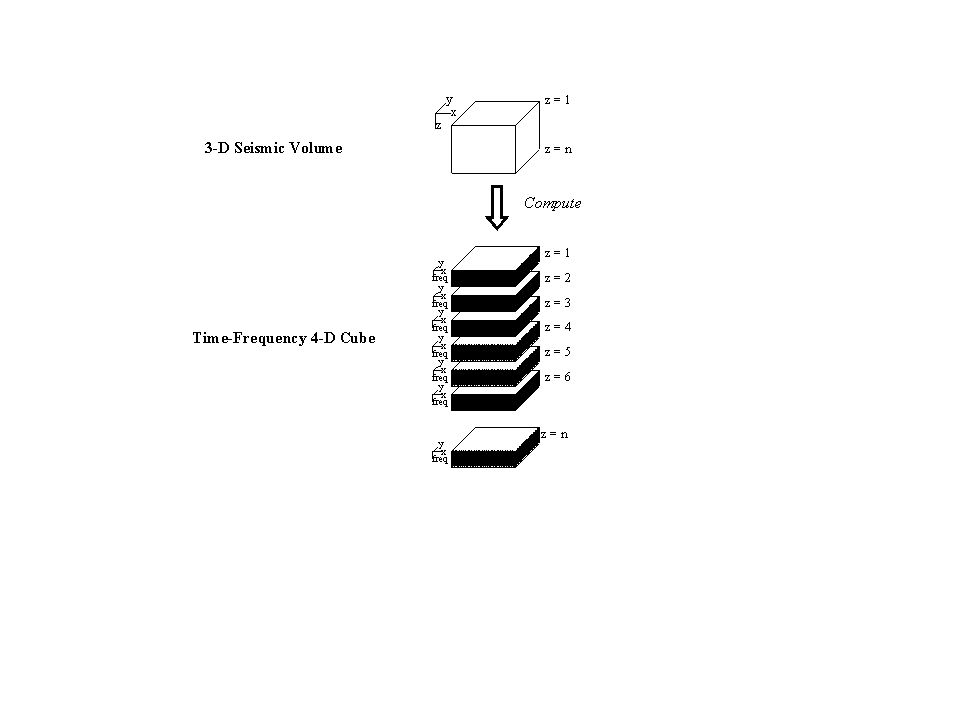
Whereas the Tuning Cube addresses the tuning problem on a local zone-of-interest scale, larger seismic volume characterization requires a different approach. For decomposition beyond the single reflectivity package or zone of interest, we recommend using "Discrete Frequency Energy Cubes" or with different data organization, the "Time-Frequency 4-D Cube".
"Discrete Frequency Energy Cubes" are computed from a single input seismic volume into multiple discrete frequency amplitude and phase volumes. Computation is done via running window spectral analysis which calculates the amplitude or phase spectrum for each sample in the seismic volume. The spectral components are then sorted into common frequency component cubes. This method is typically done only after scoping the zone of interest, horizon based Tuning Cube.
For the case of a "Time-Frequency 4-D Cube", the spectral decomposition is also computed using a running window approach. The results are sorted into common sample with increasing frequency. This volume allows the interpreter to exploit conventional interpretive workstation software and navigate through the volume at any depth slice for any frequency. The output is many times the size of the input but allows the interpreter to navigate and visualize in space, time, and frequency (x, y, t, and f).
Gulf of Mexico Data Example
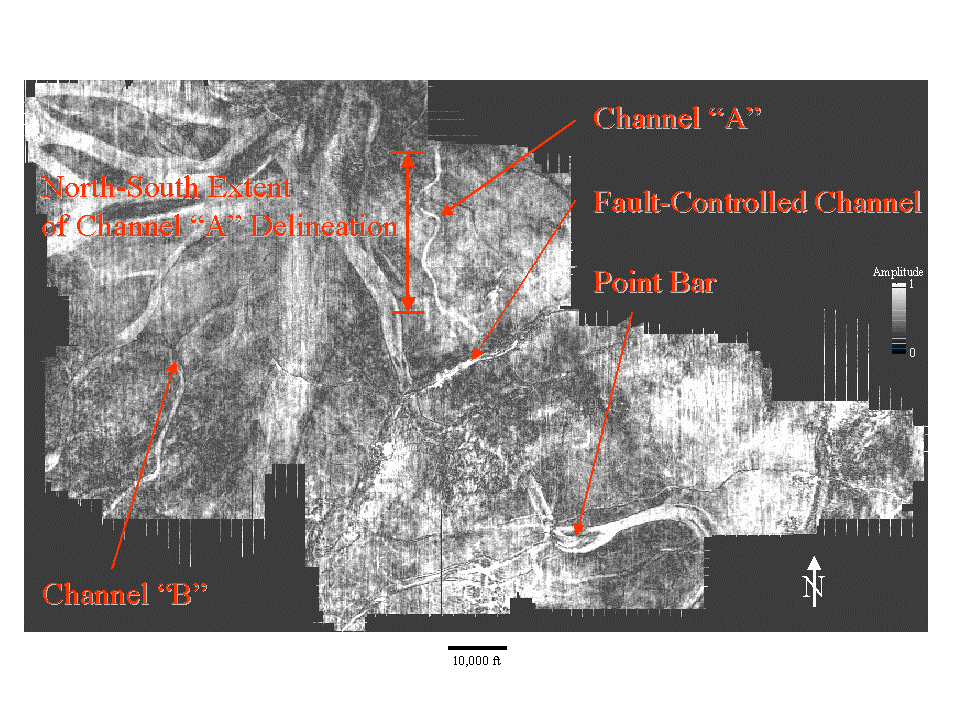
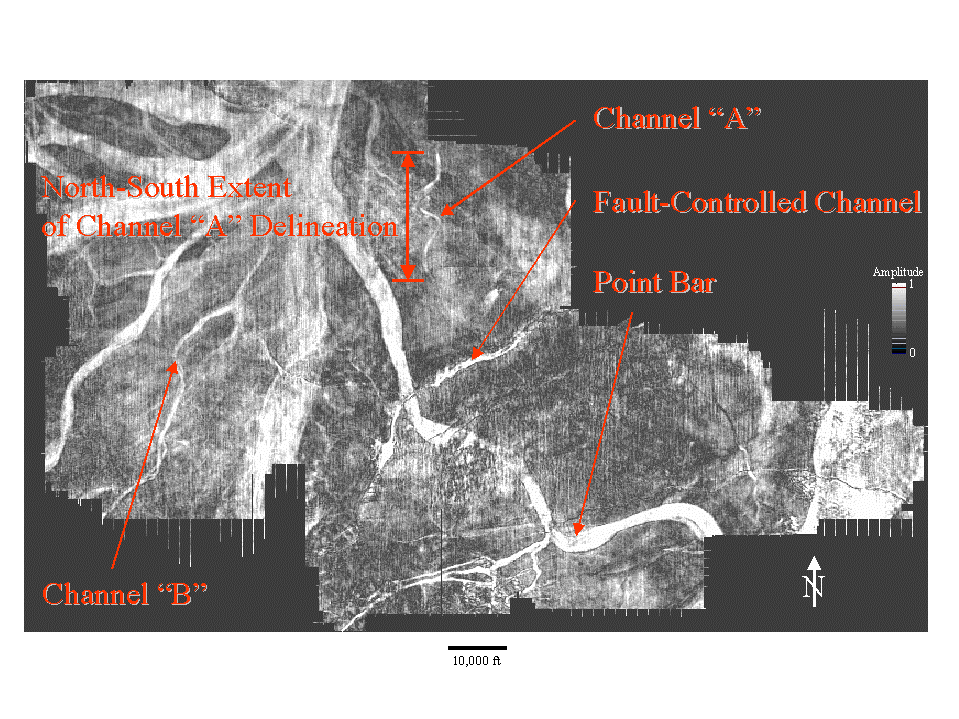
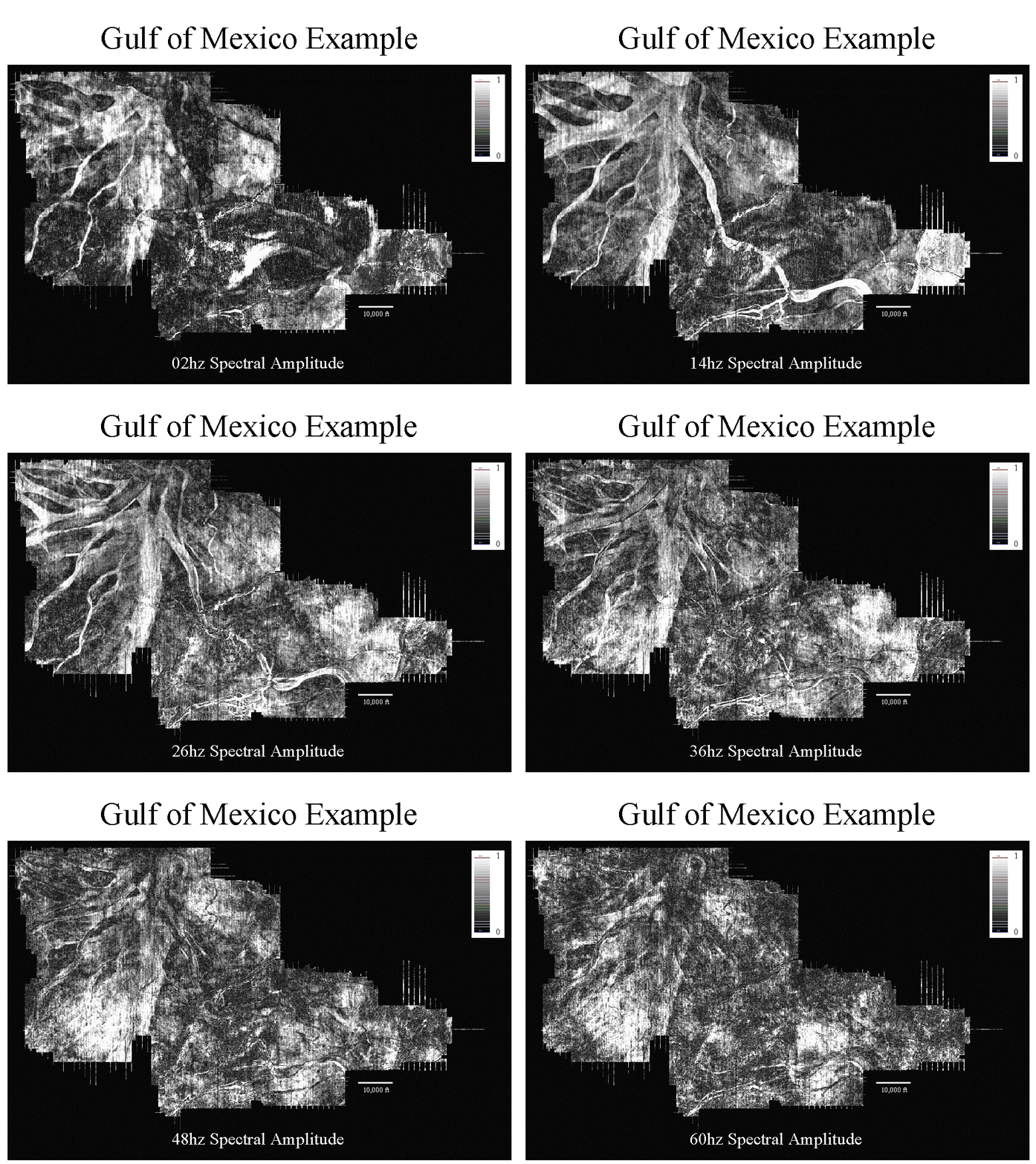
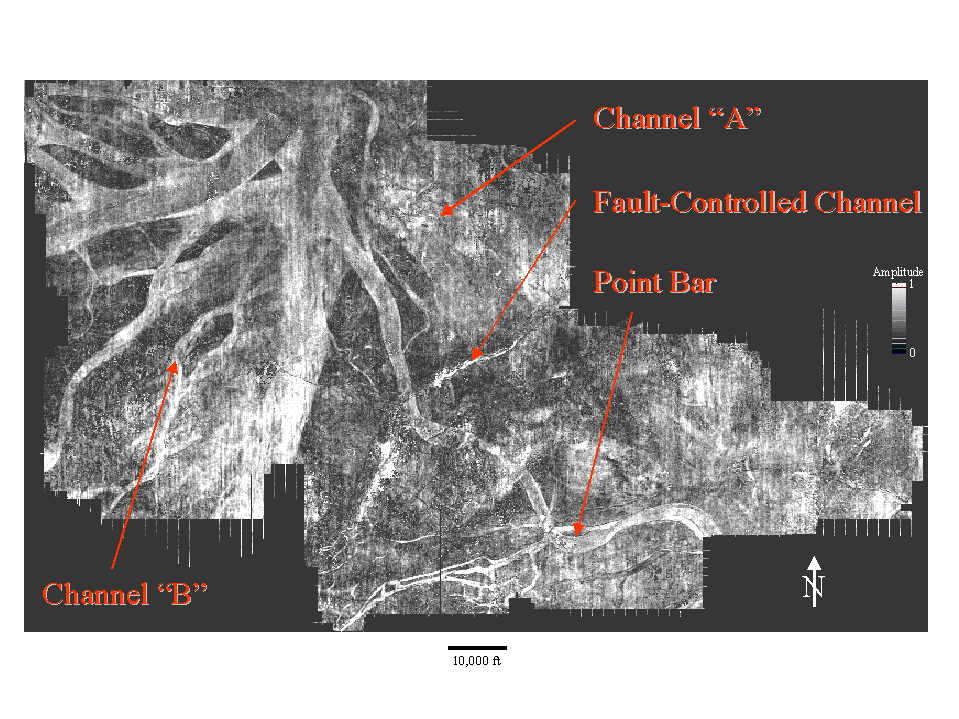
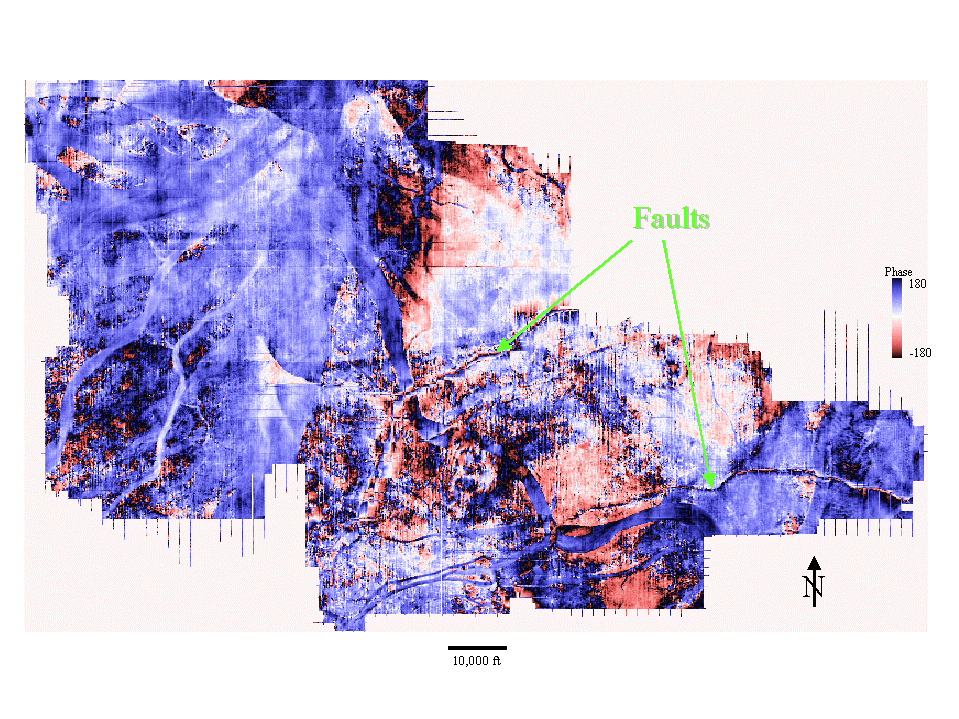
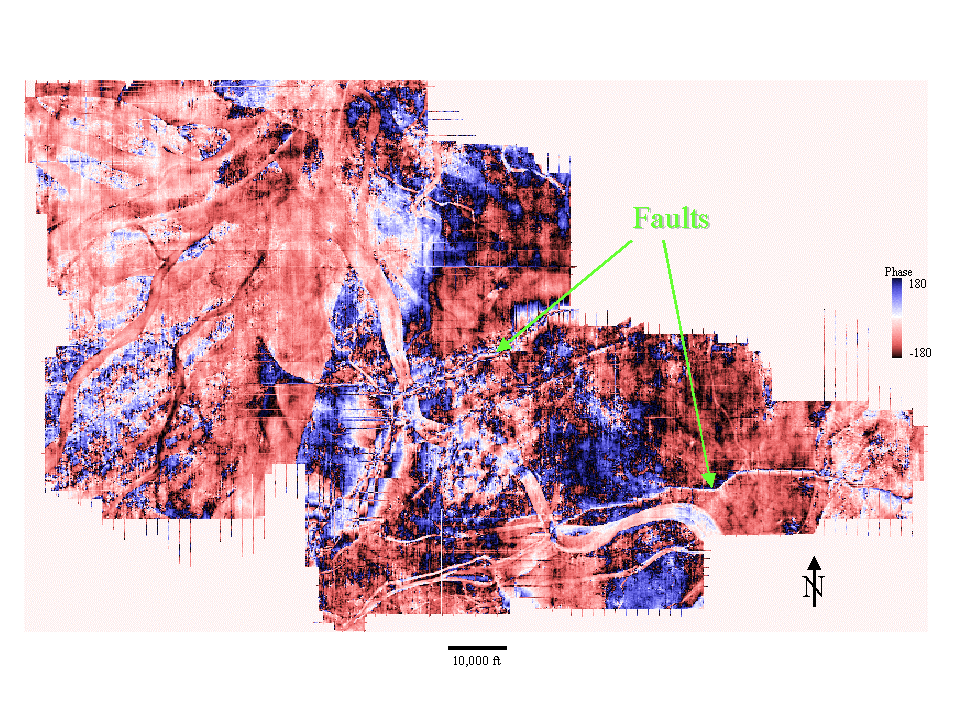
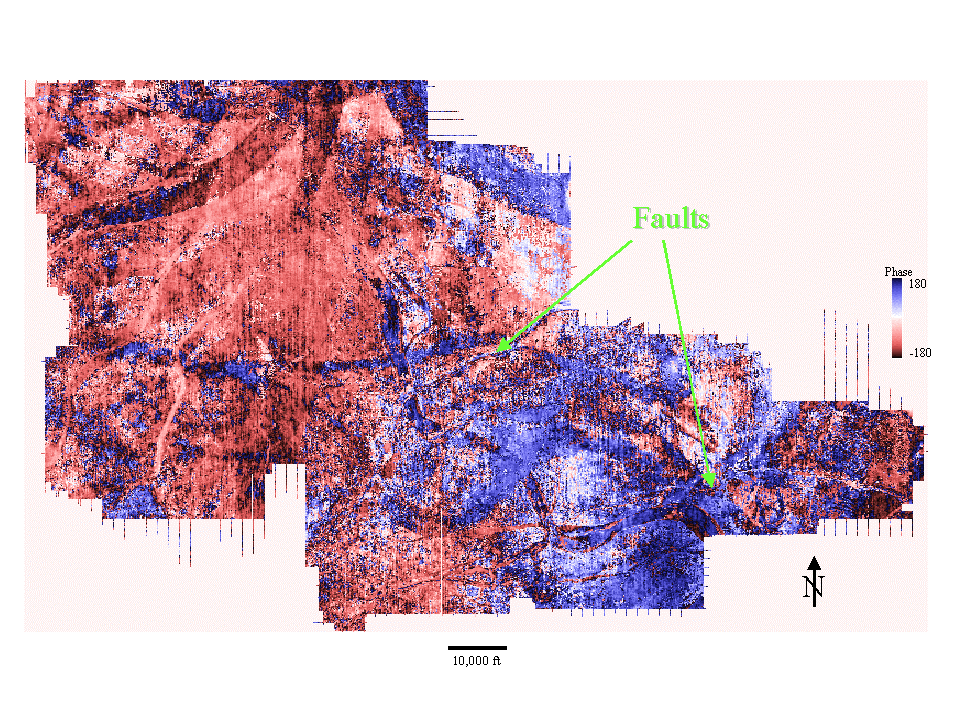
A Gulf of Mexico 3-D seismic example illustrates the use of spectral decomposition to image the Pleistocene age equivalent of the modern day Mississippi River delta (Lopez et al., 1997). The Tuning Cube frequency slices capture the subtleties of inherent tuning and reveal the various depositional features more effectively than full bandwidth amplitude and phase extractions. For example, compare the north-south delineation extent for Channel A. It is significantly better imaged by 26hz energy than by 16hz energy. On the other hand, Channel B is better imaged by 16hz energy than by 26hz energy. Any single frequency however, does not tell the full story; the strength of this technique lies in the ability to animate through the entire Tuning Cube to reveal subtle acoustic variations. Neither Channel A nor B is adequately delineated by conventional, full-bandwidth energy. The strength of the phase component lies in detecting discontinuities. The 16hz phase response and 26hz phase response are stable away from the faults, but become unstable crossing discontinuities such as faults. These spectral phase maps provide sharper definition of faults than conventional full-bandwidth response phase.
Conclusions
Spectral decomposition is a powerful technique which aides in the imaging and mapping of bed thickness and geologic discontinuities. Real seismic is rarely dominated by simple blocky, resolved reflections. In addition, true geological boundaries rarely fall along fully resolved seismic peaks and troughs. By transforming the seismic data into the frequency domain with the discrete Fourier transform, short-window amplitude and phase spectra localize thin bed reflections and define bed thickness variability within complex rock strata. This technology allows the interpreter to quickly and effectively quantify thin bed interference and detect subtle discontinuities within large 3D surveys.
Acknowledgements
We wish to thank:
Chuck Webb for recognizing the value of this technology at its inception and fostering its development.
Amoco's Seismic Coherency and Decomposition team for their ongoing development and calibration of spectral methods.
Amoco's Unix Seismic Processing Team for providing the technical framework for algorithm development and testing
References
Bracewell, R. N., 1965, The Fourier transform and its applications: McGraw-Hill Book Co.
Dilay, A. and Eastwood, J., 1995, Spectral analysis applied to seismic monitoring of thermal recovery: The Leading Edge, 11, No. 6, 1117-1122.
Lopez, J.A., Partyka , G.A., Haskell, N.L., and Nissen, S.E., Identification of Deltaic Facies with 3-D Seismic Coherency and Spectral Decomposition Cube, Abstract, Istanbul '97 International Geophysical Conference and Exposition, July 7-10, 1997.
Partyka, G.A., Gridley, J.M., Interpretational Aspects of Spectral Decomposition, Abstract, Istanbul '97 International Geophysical Conference and Exposition, July 7-10, 1997.
Widess, M.B., 1973, How Thin is a Thin Bed?, Geophysics, vol. 38, pg 1176-1180.

 Return to Online Training